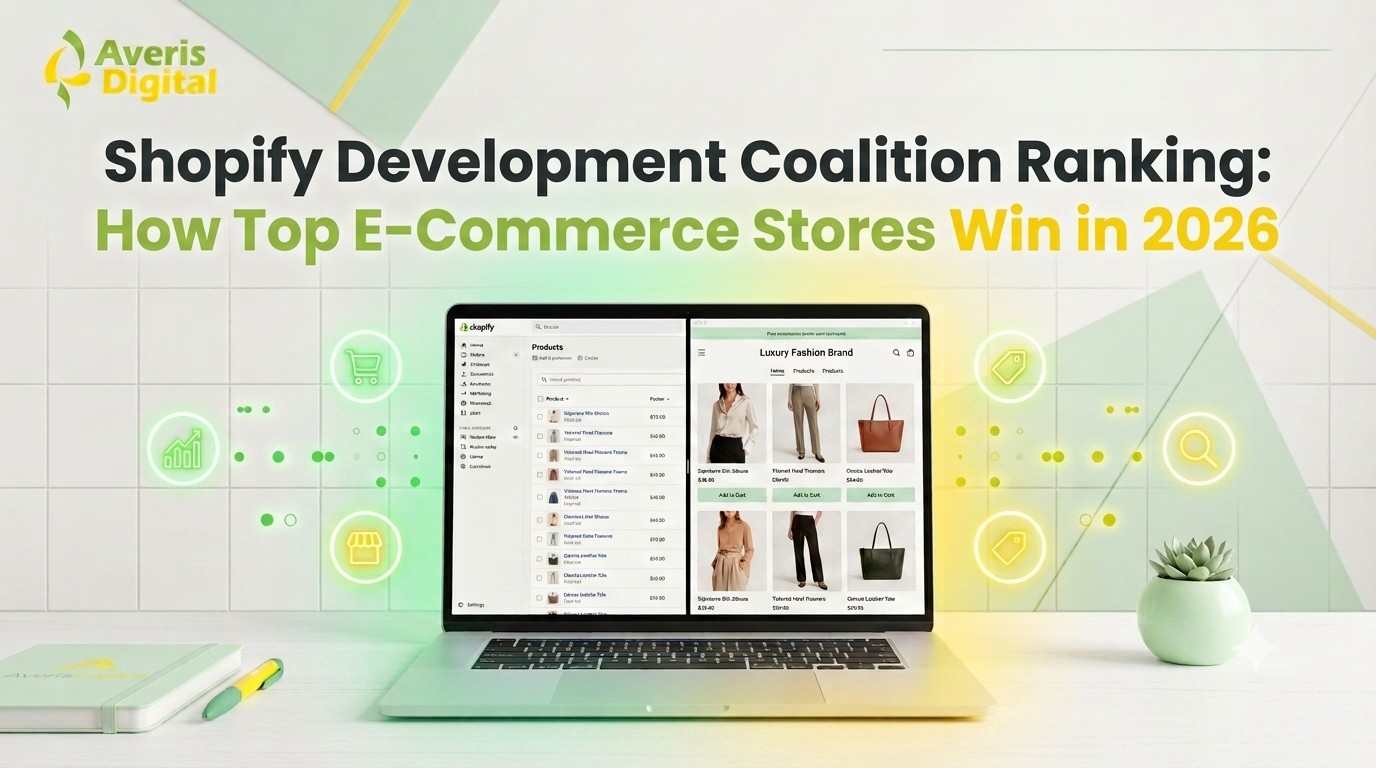
Choosing the right partner to build and grow an online store is one of the biggest decisions a business owner can make. Today, thousands of merchants search for terms like shopify development coalition ranking when they want to understand how top-performing Shopify agencies are evaluated, what separates an average online store from a market leader, and how modern search engines decide which brands deserve the top spot.
However, ranking a Shopify store in 2026 is no longer just about picking a pretty theme or adding a few basic keywords. Search behavior has changed dramatically. Shoppers now discover products through traditional Google search results, Google AI Overviews, ChatGPT, Gemini, and Claude.ai. Furthermore, the technical quality of your Shopify store directly affects whether both human shoppers and AI search platforms trust your brand.
In this comprehensive guide, we will break down everything behind shopify development coalition ranking, explain the exact technical and marketing factors that move stores to the top, and show how Averis Digital helps ambitious businesses build fast, scalable, and search-ready e-commerce stores.
What Is Shopify Development Coalition Ranking?
At its core, shopify development coalition ranking refers to the industry benchmarks, partner evaluation criteria, and performance standards used to rank and compare Shopify development and e-commerce marketing providers. Instead of relying on guesswork, business owners look at structured ranking factors—such as technical code quality, conversion rate optimization, organic search visibility, and verified client outcomes—to identify which development teams deliver real revenue growth.
Moreover, the word “coalition” in e-commerce circles also highlights an important truth: development and marketing can no longer work in separate silos. In the past, a business would hire one developer to code a website and another marketer to bring traffic. Unfortunately, that disconnected approach often failed because the store lacked clean site architecture, fast page speeds, and structured product data.
Today, the highest-ranked Shopify development frameworks unite clean engineering with search engine optimization (SEO) and generative engine optimization (GEO). When your store’s code, design, and content work together as a unified system, search engines reward your pages with higher visibility, and visitors stay longer to complete their purchases.
Why Shopify Store Architecture Matters for Google and AI Search Engines
Many store owners assume that simply launching a Shopify website guarantees traffic. In reality, millions of active e-commerce stores compete for attention every single day. Consequently, search engines like Google and AI platforms like ChatGPT, Gemini, and Claude.ai apply strict quality filters before recommending a store to users.
How Traditional Search Engines Evaluate Shopify Stores
Google’s ranking systems examine hundreds of technical and user-experience signals. Specifically, your Shopify store must excel in three foundational areas:
- Core Web Vitals and Page Speed: Slow-loading product pages frustrate mobile shoppers and increase bounce rates. Clean Liquid code, compressed next-gen images, and minimal third-party script bloat keep load times under two seconds.
- Logical Collection and URL Architecture: Search crawlers rely on clear internal linking between your homepage, category collections, and individual product pages. A messy navigation menu confuses both users and search bots.
- Mobile-First Usability: Because over 70% of e-commerce traffic comes from smartphones, every button, filter, cart drawer, and checkout step must work smoothly on small screens.
How ChatGPT, Gemini, and Claude.ai Recommend E-Commerce Brands
AI answer engines do not simply match exact keywords the way legacy search engines once did. Instead, large language models synthesize information from structured web data, authoritative brand mentions, clear product descriptions, and trustworthy domain signals.
Therefore, if you want your products to appear when a buyer asks Gemini or ChatGPT for the best options in your niche, your Shopify build needs:
- Rich Schema Markup: Structured JSON-LD data for products, prices, stock availability, shipping policies, and verified customer reviews so AI models can read your catalog effortlessly.
- Clear, Question-Answering Content: Buying guides, comparison tables, and detailed FAQs on collection and product pages that directly answer real customer questions.
- Consistent Brand Authority: Strong digital footprints across your website, social media channels like @AverisDigital, and trusted industry directories. Averis Digital
At Averis Digital, every Shopify project is engineered from day one to satisfy both traditional search algorithms and modern AI discovery engines.
Key Factors That Determine Top Shopify Development Rankings
When industry analysts and business owners evaluate shopify development coalition ranking criteria, they look far beyond surface-level visual design. Instead, top-tier Shopify solutions are measured across six critical pillars.
1. Custom Theme Engineering vs. Bloated Templates
Pre-built themes can help new brands launch quickly, yet heavy off-the-shelf templates often include unused features that slow down your website. Top development teams customize Shopify Online Store 2.0 themes so you get flexible drag-and-drop sections without sacrificing speed.
2. Conversion Rate Optimization (CRO) Built Into Every Page
Traffic means very little if visitors leave without buying. High-ranking Shopify builds incorporate proven CRO elements directly into the user journey:
F22 Labs
- Clear value propositions above the fold
- High-resolution product photography and zoom features
- Transparent shipping timelines and return policies near the “Add to Cart” button
- Friction-free slide-out carts with smart upsell recommendations
- One-page or express checkout flows that reduce cart abandonment
3. Technical SEO and Crawl Budget Management
Shopify automatically generates certain duplicate URLs for product variants and collection tags. Without proper canonical tags, clean sitemaps, and strategic robots.txt rules, search engines waste crawl budget on low-value pages. Skilled developers fix these technical leaks before launch.
4. Seamless App and Third-Party Integrations
Modern e-commerce stores rely on email marketing tools, inventory management systems, payment gateways, and shipping aggregators. However, installing too many unvetted apps injects heavy JavaScript onto your storefront. Experienced Shopify specialists integrate essential tools cleanly so your store stays fast and reliable.
CodeVibez
5. Scalable Catalog and Collection Management
As your business grows from 20 products to 2,000 SKUs, disorganized product tags and messy filters can break the shopping experience. Structured product taxonomy ensures customers can filter by size, color, price, or use case in seconds.
6. Ongoing Growth Support and Transparent Strategy
Finally, top-ranked partners do not disappear once your site goes live. They provide clear project scopes, transparent pricing, post-launch testing, and continuous SEO and marketing guidance so your store keeps compounding traffic month after month.
Comparison Table: Standard Store Setup vs. Top-Ranked Shopify Development
To see why shopify development coalition ranking standards make such a dramatic difference to your bottom line, compare a basic DIY or low-cost template setup against a strategic, search-engineered build from Averis Digital.
| Evaluation Factor | Basic / Unoptimized Shopify Setup | Top-Ranked Shopify Development (Averis Digital Approach) |
|---|---|---|
| Site Speed & Core Web Vitals | Often slow (4–7 seconds) due to heavy apps and uncompressed media | Fast load times (under 2 seconds) with clean, lightweight code |
| SEO & URL Architecture | Default settings with duplicate tag URLs and thin collection pages | Clean canonical structure, keyword-mapped collections, and technical SEO |
| AI Search Readiness (GEO) | Lacks structured data; rarely cited by ChatGPT, Gemini, or Claude.ai | Full product schema, semantic headings, and FAQ blocks built for AI citations |
| Mobile Shopping Experience | Generic responsive layout with awkward navigation or tiny buttons | Mobile-first UI/UX engineered for smooth thumb-friendly browsing and checkout |
| Conversion Optimization (CRO) | Basic product page with minimal trust signals or cross-selling | Strategic trust badges, clear CTAs, sticky add-to-cart, and smart product bundles |
| Scalability & Maintenance | Difficult to update without breaking layouts or creating bugs | Modular Shopify 2.0 sections with structured testing and dedicated support |
How Averis Digital Helps Brands Achieve Top Shopify Rankings
At Averis Digital, we believe a great e-commerce website should be your hardest-working salesperson. Rather than treating web development and digital marketing as separate tasks, our team combines technical Shopify engineering with data-driven SEO and AI search optimization.
Whether you are launching your very first direct-to-consumer (D2C) brand or upgrading an established store that has hit a growth plateau, our practical process keeps every milestone transparent and aligned with your revenue goals.
Our 6-Step Shopify Development & Ranking Process
- Business & Competitor Discovery: First, we analyze your products, target audience, profit margins, and search competitors to define a clear technical and SEO roadmap.
- Information Architecture & Wireframing: Next, we map out intuitive navigation menus, high-converting collection hierarchies, and user-friendly page layouts before writing a single line of code.
- Custom Design & Theme Customization: Then, we craft a clean, modern visual identity tailored to your brand—focusing on readability, trust, and effortless product discovery.
- Clean Development & App Configuration: Our developers configure payment gateways, shipping zones, tax rules, product catalogs, and essential integrations while keeping site performance fast.
- SEO, Schema & Multi-Device Testing: Before launch, we implement on-page SEO fundamentals, structured data, meta tags, and rigorous mobile/desktop quality checks.
- Launch & Continuous Growth Optimization: Finally, we deploy your store smoothly and support your ongoing growth through organic SEO, content marketing, and performance campaigns.
You can also follow our latest web design tips, SEO insights, and project showcases directly on Instagram at @AverisDigital.
Averis Digital
Actionable Checklist: How to Improve Your Shopify Store’s Ranking Today
Even if you already have an active Shopify store, you can start applying shopify development coalition ranking best practices right away. Use this practical checklist to spot quick wins:
- Audit Your Installed Apps: Remove any unused Shopify apps that still leave behind leftover code snippets in your theme files.
- Rewrite Manufacturer Product Descriptions: Never copy and paste generic supplier text. Write unique, benefit-driven descriptions that answer buyer questions and naturally include target keywords.
- Optimize Collection Pages: Add 150–300 words of helpful introductory and buying-guide content to your top category pages so Google understands what each collection sells.
- Compress All Product Images: Convert oversized PNG or JPEG files into lightweight WebP images and add descriptive alt text to every photo.
- Add Verified Customer Reviews: Social proof boosts both conversion rates on the page and star-rating rich snippets in search results.
- Strengthen Internal Linking: Link from your educational blog posts directly to your highest-margin product collections using natural, descriptive anchor text.
If you want a professional audit of your current store’s speed, structure, and search visibility, explore our complete Shopify website development services to see how we can help.
Common Mistakes That Hurt Shopify Store Rankings
Even well-funded e-commerce brands sometimes lose valuable organic traffic because of avoidable technical errors. Watch out for these five common pitfalls:
- Ignoring Duplicate Collection URLs: Linking to
/collections/all/tag-nameinstead of clean, dedicated collection URLs dilutes your link equity across multiple pages. - Using Oversized Hero Sliders: Auto-playing carousels with massive uncompressed images slow down your Largest Contentful Paint (LCP) score and distract shoppers from clicking into products.
- Leaving Out Alt Text and Meta Descriptions: Blank image alt tags and auto-generated meta descriptions miss easy opportunities to capture long-tail search clicks.
- Deleting Out-of-Stock Product Pages Without Redirects: Removing discontinued products without setting up 301 redirects creates broken 404 links that hurt user trust and search rankings.
- Treating AI Search as an Afterthought: Failing to include structured FAQs, clear comparison specs, and authoritative brand signals prevents AI engines like ChatGPT and Gemini from recommending your store.
Frequently Asked Questions (FAQs)
1. What does shopify development coalition ranking mean for online store owners?
Shopify development coalition ranking refers to the combined technical, design, and marketing benchmarks used to evaluate top Shopify development teams and high-performing online stores. For store owners, it serves as a practical framework for choosing a partner that unites clean website coding with SEO, conversion optimization, and AI search readiness.
2. How long does it take to build an SEO-ready Shopify website?
A standard custom Shopify store typically takes between 2 to 6 weeks, depending on your catalog size, custom design requirements, and third-party integrations. More complex stores with large product migrations or custom workflows may take slightly longer to ensure thorough testing and zero SEO traffic loss.
CodersBucket
3. Can a Shopify store rank on ChatGPT, Gemini, and Claude.ai?
Yes. AI platforms pull product and brand recommendations from well-structured websites that feature clear schema markup, comprehensive product specifications, helpful FAQ sections, and strong brand authority across the web. Building your Shopify store with clean semantic structure dramatically improves your chances of being cited in AI-generated answers.
4. Why should I choose Averis Digital for Shopify development and SEO?
Averis Digital bridges the gap between technical Shopify development and modern search marketing. Instead of delivering a basic template that struggles to get traffic, our team builds fast, mobile-friendly, conversion-focused Shopify stores backed by human-written SEO content and AI search optimization strategies tailored to your business goals.
5. What is the difference between hiring a general web designer and a specialized Shopify development team?
A general web designer usually focuses only on visual appearance. In contrast, a specialized Shopify development team understands Liquid theme architecture, checkout optimization, app performance, technical e-commerce SEO, and structured product data—ensuring your store not only looks professional but also loads quickly and converts visitors into repeat customers.
Conclusion: Build a Shopify Store Engineered to Rank and Convert
Winning in modern e-commerce requires far more than simply putting products online. As search engines and AI assistants become smarter, the stores that rise to the top are those built on clean code, fast mobile performance, helpful content, and conversion-focused design. By understanding the principles behind shopify development coalition ranking, you can make smarter investments that protect your margins and drive sustainable organic growth.
Ready to launch a high-converting online store or transform your existing Shopify website into a top-ranking revenue engine? Connect with Averis Digital today for a tailored strategy consultation, explore our Shopify development solutions, and follow @AverisDigital on Instagram for actionable e-commerce and SEO insights every week.