
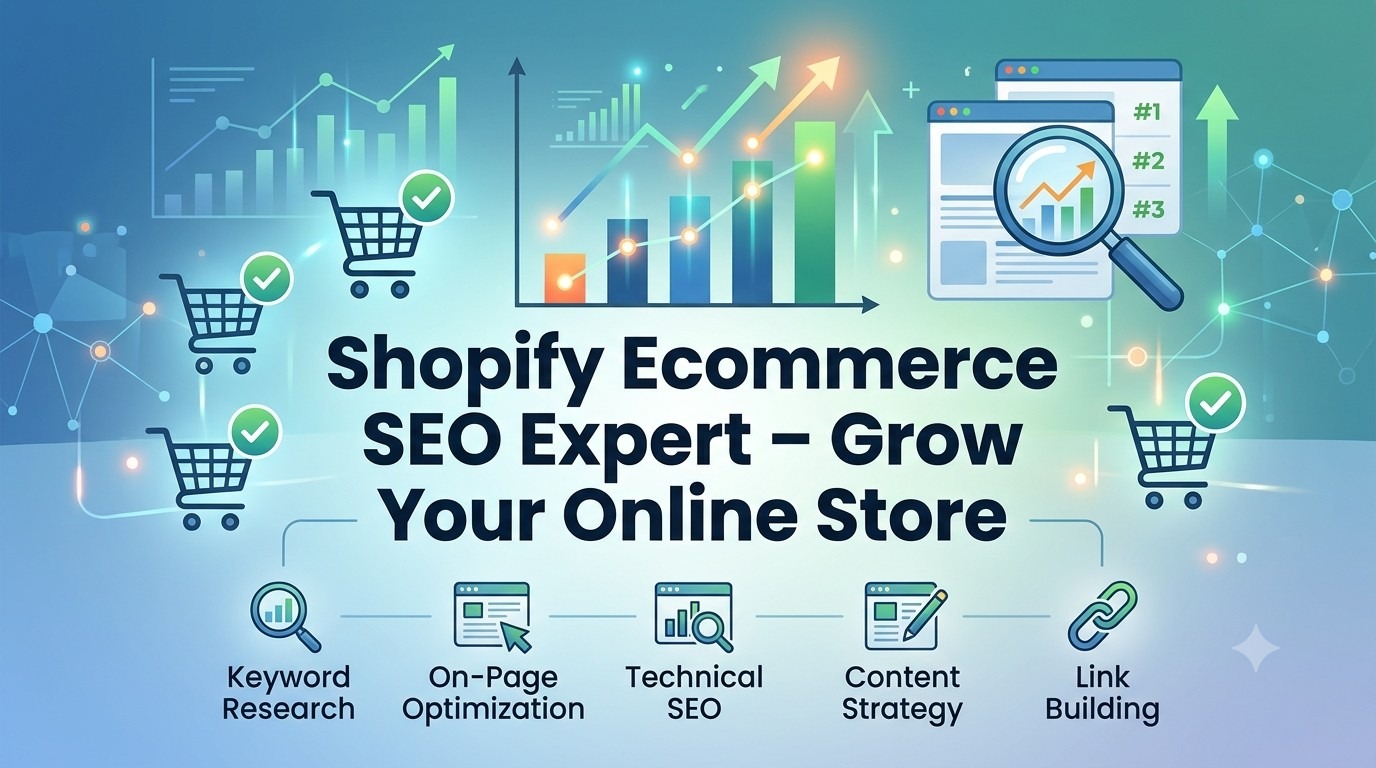
Online shopping has changed how people discover products and make buying decisions. Today, customers search online to compare products, check features, explore collections and find stores that meet their needs. Therefore, having an attractive online store is no longer enough. Your products also need to appear in relevant search results. Working with a professional Shopify Ecommerce SEO Expert can help optimise your product pages, improve search visibility, attract potential customers and build a stronger online presence for your Shopify store.
Shopify makes it easier for businesses to create and manage online stores. However, building a store does not automatically bring visitors, enquiries or sales. Your product pages, collection pages, website structure and content all need proper optimisation.
This is where a Shopify ecommerce SEO expert can help. A professional SEO strategy focuses on improving your store’s search visibility, attracting relevant visitors and making it easier for customers to discover your products.
At AverisDigital, we understand that every online store has different products, customers and business goals. Therefore, our approach focuses on practical SEO improvements that support long-term growth.
Whether you are starting a new Shopify store or improving an existing one, the right SEO strategy can help your business reach more potential customers through organic search.
What Is a Shopify Ecommerce SEO Expert?
A Shopify ecommerce SEO expert is an SEO professional who specialises in improving the organic search performance of Shopify websites.
The main goal is to help search engines understand your online store and make your products easier for potential customers to find.
Unlike a general business website, an e-commerce store often contains many product pages, categories, collections, filters and images. Consequently, SEO requires a clear structure and consistent optimisation.
A Shopify SEO expert may work on:
- Shopify keyword research.
- Product title optimisation.
- Product description writing.
- Collection page SEO.
- Technical SEO.
- Website speed and mobile usability.
- Internal linking.
- Image optimisation.
- Duplicate content checks.
- Structured data.
- SEO content planning.
- Organic traffic analysis.
For example, imagine that you sell travel bags through Shopify. Your store may have several product types, including backpacks, laptop bags, school bags and luggage. Each category needs relevant keywords and useful content.
A well-planned SEO strategy helps search engines understand these pages while helping customers find the products they want.
Why Does Your Shopify Store Need SEO?
Launching an online store is only the beginning. The next challenge is helping customers discover it.
Many businesses depend heavily on paid advertising or social media to bring visitors to their websites. Although these channels can be useful, organic search can also become an important source of relevant traffic.
Here are some reasons why Shopify SEO matters.
1. Improve Product Visibility
Customers often search for a specific product before making a purchase. If your product pages are properly optimised, they have a better opportunity to appear for relevant searches.
For example, a customer looking for a laptop backpack may search using terms related to size, material, features or usage.
Therefore, your product pages should explain these details clearly and naturally.
2. Attract Relevant Visitors
Not every website visitor is a potential customer. Your store needs people who are genuinely interested in the products you sell.
Keyword research helps identify searches related to your products and customer needs.
As a result, your SEO strategy can focus on attracting visitors who are more likely to explore your collections and consider placing an order.
3. Build Long-Term Organic Traffic
Paid campaigns can bring visitors while advertisements are running. However, organic SEO focuses on improving your website’s visibility in unpaid search results.
SEO takes time and does not guarantee rankings. Nevertheless, consistent improvements can help build a stronger foundation for long-term traffic.
4. Improve the Shopping Experience
SEO is not only about search engines. It also involves creating a website that customers can use easily.
Clear product information, organised collections, simple navigation and mobile-friendly pages make shopping more convenient.
Consequently, good website optimisation can support both visibility and usability.
5. Support Business Growth
A properly organised Shopify store makes it easier to add new products, create collections and expand your online presence.
Furthermore, an effective SEO strategy can help your business reach customers searching for different product types and related topics.
Important Shopify Ecommerce SEO Services
A successful SEO strategy covers several areas of your online store. Each area supports a different part of the customer journey.
1. Shopify SEO Audit
An SEO audit helps identify issues that may affect your store’s search performance.
Before making changes, an SEO expert should review the website’s current condition.
A Shopify SEO audit may include:
- Website structure.
- Search engine indexing.
- Product page optimisation.
- Collection page content.
- Page titles and meta descriptions.
- Duplicate content.
- Internal links.
- Broken links.
- Mobile usability.
- Website loading performance.
- Image optimisation.
- Structured data.
After the audit, issues can be organised according to their importance. This helps create a practical action plan instead of making random website changes.
2. Shopify Keyword Research
Keyword research helps you understand what potential customers search for when looking for your products.
For an e-commerce website, keywords can be divided into different groups.
Product keywords: These describe a specific item or product type.
Category keywords: These relate to a wider collection of products.
Informational keywords: These are searches made by people looking for advice or product information.
Buying-intent keywords: These suggest that a person is comparing products or considering a purchase.
For example, a business selling shoes may target searches related to running shoes, men’s running shoes, lightweight sports shoes and shoe care tips.
However, keywords should always match the products and content on the page. Adding unrelated search terms will not create a useful customer experience.
3. Shopify Product Page Optimisation
Product pages are among the most important pages on an online store.
They explain what a product offers and help customers decide whether it meets their needs.
A Shopify ecommerce SEO expert can improve product pages by focusing on the following elements:
Product Titles
Product titles should clearly describe the item. Include relevant product information without making the title unnecessarily long.
For example, instead of using a general title such as “Travel Bag”, a more descriptive title could explain the bag type, size or main feature.
Product Descriptions
Product descriptions should answer common customer questions.
Include useful information such as:
- Product material.
- Size and dimensions.
- Available colours.
- Main features.
- Usage and benefits.
- Care instructions.
- Product specifications.
Additionally, write original descriptions for important products. Avoid copying the same text across several pages.
Product Images
Images help customers understand the appearance and features of a product.
Use clear images that show the item from useful angles. Also, add descriptive image filenames and alt text where appropriate.
For example, an image of a black laptop backpack should have alt text that accurately describes what is visible.
Meta Titles and Descriptions
Every important product page should have a relevant SEO title and meta description.
These elements should describe the product clearly and encourage users to visit the page from search results.
4. Shopify Collection Page SEO
Collection pages organise products into useful categories.
For example, a clothing store may have collections for men’s clothing, women’s clothing, jackets, shirts and accessories.
However, collection pages should not contain only product images. A short, useful introduction can explain the category and help visitors understand what they will find.
Collection page optimisation may include:
- Relevant collection names.
- Search-friendly page titles.
- Clear meta descriptions.
- Useful introductory content.
- Proper heading structure.
- Links to related collections.
- Easy product navigation.
As a result, customers can browse products more easily while search engines can better understand the collection.
5. Shopify Technical SEO
Technical SEO helps search engines access, crawl and index your website.
Even a well-designed Shopify store may have technical issues that need attention.
Important technical SEO areas include:
- XML sitemap.
- Robots.txt settings.
- Canonical URLs.
- Redirects.
- Broken links.
- Duplicate pages.
- Indexing issues.
- Mobile responsiveness.
- Website speed.
- Structured data.
Shopify manages several technical elements automatically. However, store themes, apps, filters and website changes can still create issues.
Therefore, regular technical checks are important.
6. Shopify Website Speed Optimisation
Website speed affects how visitors experience your online store.
A slow website can make browsing difficult, especially for customers using mobile devices or slower internet connections.
Some common areas to review include:
- Large image files.
- Unnecessary applications.
- Heavy theme elements.
- Excessive scripts.
- Unused website code.
- Poorly optimised videos.
- Third-party tracking scripts.
However, speed improvements should be tested carefully. Removing an application or changing website code without checking its purpose may affect important store features.
7. Shopify Image SEO
Product images are an essential part of online shopping. Customers use them to understand product appearance, design and details.
Image SEO helps search engines understand images while supporting website performance.
Useful image optimisation practices include:
- Descriptive image filenames.
- Accurate alt text.
- Appropriate image dimensions.
- Compressed image files.
- Relevant product photography.
- Consistent image quality.
For example, a descriptive filename such as black-laptop-backpack.jpg is more meaningful than a generic filename such as IMG12345.jpg.
8. Shopify Blog SEO
A Shopify blog can help your store attract visitors who are researching products before purchasing.
For example, a business selling skincare products may publish useful articles about skincare routines, product ingredients and choosing suitable products.
Similarly, a store selling travel bags may create articles about choosing luggage, packing tips and travel accessories.
Blog content should answer genuine customer questions. Additionally, relevant articles can link to suitable product and collection pages.
This creates useful connections between informational content and shopping pages.
Shopify SEO Expert vs General SEO Expert
Both professionals work to improve organic search visibility. However, Shopify SEO requires a specific understanding of online stores and their product structures.
| SEO Area | General SEO Expert | Shopify Ecommerce SEO Expert |
|---|---|---|
| Keyword research | Business and service keywords | Product, category and buying-intent keywords |
| Page optimisation | Service and information pages | Product and collection pages |
| Website structure | General website navigation | Product categories and store collections |
| Content strategy | Blogs and service content | Blogs, product descriptions and collection content |
| Technical SEO | General website checks | Shopify-specific store structure and technical checks |
| Image optimisation | Website images | Product and collection images |
| Conversion focus | Enquiries and leads | Product discovery and online purchases |
| SEO reporting | Organic traffic and rankings | Product visibility, organic traffic and store performance |
The best choice depends on your website. If your business operates an online Shopify store, an expert with e-commerce SEO experience can better understand its specific optimisation needs.
How to Choose the Right Shopify Ecommerce SEO Expert
Selecting an SEO professional is an important decision. Your choice should be based on practical knowledge, a clear process and an understanding of your business.
Consider these points before making a decision.
1. Check Shopify SEO Knowledge
The expert should understand how Shopify stores work, including product pages, collections, navigation and website settings.
They should also understand general SEO practices such as keyword research, content optimisation and technical SEO.
2. Ask About the SEO Audit
A professional should review your website before recommending major changes.
The audit should explain what is working, what needs improvement and which tasks should receive priority.
3. Review the Content Strategy
Product descriptions and collection content should be written for customers.
Ask how the SEO expert plans to improve content quality, keyword relevance and page structure.
4. Understand the Reporting Process
SEO reports should be clear and useful.
They should explain changes in organic clicks, impressions, product page performance and other relevant indicators.
Furthermore, reporting should include the next steps rather than only showing keyword positions.
5. Avoid Guaranteed Ranking Claims
Search rankings depend on many factors, including competition, website quality, search intent and algorithm changes.
Therefore, no professional can honestly guarantee a specific position for every keyword.
Choose an expert who explains realistic goals and focuses on consistent improvement.
How AverisDigital Helps Improve Shopify SEO
AverisDigital focuses on helping businesses improve their online presence through practical SEO and website optimisation.
We understand that an e-commerce website needs more than attractive product images. It needs a clear structure, useful product information and a smooth shopping experience.
Our Shopify SEO approach focuses on the following areas.
Business and Website Understanding
We begin by understanding your products, target customers and business objectives.
This helps us create an SEO plan that matches your store instead of following a generic checklist.
Keyword and Competitor Research
We research relevant search terms and identify opportunities for product pages, collections and supporting content.
This helps organise your website around the searches that matter to your business.
Product and Collection Optimisation
We focus on improving product titles, descriptions, meta information and collection page content.
Additionally, we review internal links and page structure to help customers navigate your store.
Technical SEO Improvements
We review important technical elements that may affect crawling, indexing and website performance.
Where needed, we recommend practical changes to improve the store’s technical health.
Content and Organic Growth Strategy
We help plan useful content that supports your products and answers customer questions.
The goal is to create a consistent SEO foundation that supports long-term organic growth.
Explore our services at AverisDigital.com.
Common Shopify SEO Mistakes to Avoid
Many online stores have SEO problems because important details are overlooked.
Avoiding these mistakes can help create a better foundation for your website.
1. Using Duplicate Product Descriptions
Using identical descriptions across several product pages can make it difficult to explain what makes each product different.
Instead, write useful descriptions that highlight the features and benefits of each item.
2. Ignoring Collection Pages
Collection pages help customers explore related products. However, many stores leave them with only a heading and product grid.
Add a relevant introduction and organise collections clearly.
3. Ignoring Mobile Users
Many customers browse online stores through mobile phones.
Therefore, check that your website navigation, product images, buttons and checkout experience work properly on smaller screens.
4. Adding Too Many Shopify Apps
Applications can add useful features, but unnecessary apps may affect website performance or create extra scripts.
Review your installed applications regularly and keep only those that support your store’s needs.
5. Publishing Content Without Research
Blog articles should answer real customer questions.
Avoid publishing content only to add more pages to your website. Instead, research topics that relate to your products and provide useful information.
6. Forgetting Internal Links
Internal links connect related pages within your website.
For example, a blog about choosing travel bags can link to a relevant travel bag collection.
This helps visitors discover related products and creates a clearer website structure.
Shopify Ecommerce SEO Checklist
Use this checklist to review the important SEO elements of your online store.
- Research relevant product and category keywords.
- Write unique product titles.
- Improve product descriptions.
- Optimise collection pages.
- Add relevant meta titles and descriptions.
- Use descriptive image filenames and alt text.
- Check mobile usability.
- Review website loading performance.
- Check indexing and sitemap settings.
- Review canonical URLs and redirects.
- Fix broken internal links.
- Add useful internal links.
- Publish relevant blog content.
- Monitor organic search performance.
- Review SEO progress regularly.
Following this checklist can help you identify areas that need attention. However, the priority of each task will depend on your store’s current condition.
Frequently Asked Questions (FAQs)
1. What does a Shopify ecommerce SEO expert do?
A Shopify ecommerce SEO expert improves an online store’s organic search visibility. Their work may include keyword research, product page optimisation, collection SEO, technical SEO, image optimisation and content planning.
2. Why is SEO important for a Shopify store?
SEO helps potential customers discover your products through relevant search results. It can support organic traffic, improve product visibility and make your online store easier to navigate.
3. How long does Shopify SEO take to show results?
SEO does not produce the same results for every website. The timeline depends on competition, website condition, content quality and the improvements made. It is a long-term process that requires regular monitoring.
4. Can product descriptions improve Shopify SEO?
Yes. Clear and original product descriptions help explain what an item offers. They also provide useful information for customers and help search engines understand the page. However, descriptions should be written naturally rather than filled with repeated keywords.
5. Can AverisDigital help with Shopify ecommerce SEO?
AverisDigital provides SEO-focused support for businesses looking to improve their online visibility. Our work can include keyword research, product and collection optimisation, technical SEO, content planning and website analysis.
Conclusion
Running a successful Shopify store requires more than uploading products and choosing an attractive theme. Customers need to find your products, understand their features and enjoy a smooth shopping experience.
This is why SEO plays an important role in e-commerce growth. From keyword research and product descriptions to collection optimisation and technical SEO, every part of your store contributes to its online visibility.
Working with a Shopify ecommerce SEO expert can help you identify website issues, improve important pages and build a clear strategy for organic growth.
At AverisDigital, we focus on practical Shopify SEO improvements that support your business goals. Whether you are launching a new online store or improving an existing one, we can help you build a stronger search presence.
Ready to improve your Shopify store’s visibility?
Visit AverisDigital.com and connect with our team to discuss your e-commerce SEO requirements.
Contact AverisDigital
- Website: https://averisdigital.com/
- Email: Namaste@AverisDigital.com
- Phone: +91 9910 368 366
- Instagram: @AverisDigital
Build a stronger online store with a clear SEO strategy and a better shopping experience.